
How a Roadside Stop Can Threaten Your Commercial License
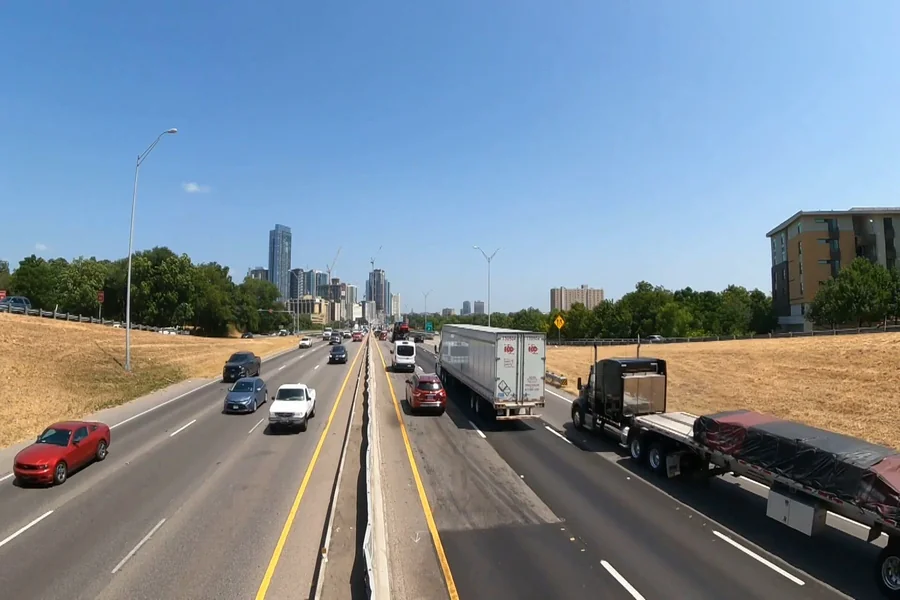
For professional truck drivers and commercial fleet operators, a Commercial Driver’s License (CDL) is far more than an identification card—it is the foundation of their livelihood. While a routine traffic ticket for speeding or a lane violation is an annoying inconvenience for a commuter, it can be a career-ending event for a commercial driver.
Commercial drivers operate under a strict dual layer of legal oversight: state traffic statutes and federal safety standards enforced by the Federal Motor Carrier Safety Administration (FMCSA).
Because professional drivers are held to higher safety standards, even minor roadside interactions in a personal vehicle can trigger severe license suspensions, points on your driving record, and job termination.
1. Why Commercial Drivers Face Heightened Legal Standards
Quick Answer: Commercial drivers face stricter regulations because federal and state laws hold heavy-vehicle operators to higher safety standards, apply lower impairment thresholds, and impose harsher penalties for everyday traffic infractions.
Federal motor carrier safety laws recognize that fully loaded tractor-trailers, tanker trucks, and passenger buses pose greater risks on public highways than standard passenger cars. Consequently, the legal tolerance for driver error, moving violations, or substance use is significantly lower.
When a law enforcement officer pulls over a CDL holder, the interaction is documented differently. Citations are reported to state licensing agencies and routed directly into federal tracking databases, including the Commercial Driver’s License Information System (CDLIS) and the FMCSA’s Safety Measurement System (SMS).
Even if a ticket does not immediately result in license suspension, it generates points that damage your employer’s safety rating and escalate your personal risk profile.
2. Strict Commercial Driver BAC Limits and Personal Vehicle Overlap
Quick Answer: The legal blood alcohol concentration (BAC) limit for operating a commercial motor vehicle is 0.04%—half the standard limit for non-commercial drivers—and a DUI conviction in a personal vehicle also results in CDL disqualification.
One of the most dangerous traps for commercial drivers is assuming that off-duty conduct in a personal vehicle will not affect their professional driving privileges. Under federal regulations, a major offense committed in a personal car carries the same mandatory CDL suspension as one committed while driving a rig.
In most states, the standard legal BAC threshold for non-commercial drivers is 0.08%, though states like Utah maintain a stricter 0.05% limit. However, when operating a commercial motor vehicle, the national threshold drops to 0.04%.
A single conviction for driving under the influence—regardless of what vehicle you were driving at the time—triggers an automatic 1-year CDL disqualification penalty for a first offense and a lifetime ban for a second offense.
Because state laws enforce strict CDL disqualification standards even when operating personal vehicles, consulting legal experts in DUI defense law in Utah can help commercial drivers contest charges, challenge field sobriety test procedures, and safeguard their professional driving privileges.
3. “Serious Traffic Violations” That Trigger Automatic Suspensions
Quick Answer: Accumulating two “serious traffic violations” within three years results in a mandatory 60-day CDL suspension, while three violations within three years triggers a 120-day suspension.
A commercial driver does not need to face a criminal DUI charge to lose their license. The FMCSA categorizes specific everyday moving citations as serious traffic violations for commercial drivers. While a single infraction usually results in fines and points, repeat offenses within a 3-year window lead to mandatory disqualification.
Common Offenses Classified as Serious Traffic Violations
- Excessive Speeding: Driving 15 mph or more above the posted speed limit.
- Reckless or Careless Driving: Operating a vehicle with willful or wanton disregard for the safety of others.
- Improper Lane Changes: Erratic lane shifts or failing to signal before changing lanes.
- Following Too Closely: Tailgating or failing to maintain safe stopping distances.
- Cell Phone Use: Texting or holding a mobile device while driving a commercial vehicle.
- Driving Without Proper Class: Operating a CMV without the proper CDL class or endorsements.
Many drivers make the mistake of paying a ticket by mail to “get it over with.” In the eyes of the law, paying a fine is an admission of guilt, resulting in an automatic conviction on your record.
4. The Severe Consequences of Refusing a Chemical Test
Quick Answer: Refusing a breath, blood, or urine test during a roadside stop triggers an automatic 1-year CDL disqualification, carrying the same license penalty as a DUI conviction.
When you obtain a commercial driver’s license, you agree to implied consent laws. This means that by operating a vehicle on public roadways, you give implicit consent to submit to chemical testing if a law enforcement officer has reasonable suspicion of impairment.
Some drivers incorrectly believe that refusing a breathalyzer or blood test protects them by denying prosecutors chemical evidence. For CDL holders, this strategy backfires completely.
Under 49 CFR 383.51, refusing a chemical test is classified as a “major offense”. An administrative refusal results in an immediate 1-year suspension of your commercial driving privileges—even if you are later acquitted of the underlying DUI charge in criminal court.
5. Myths vs. Facts About CDL Roadside Citations
- Myth: “If I get a ticket in my personal car, I can take traffic school to keep it off my CDL.”
- Fact: Federal regulations explicitly prohibit states from masking, deferring, or allowing traffic school diversion programs for CDL holders to hide moving violations from their permanent record.
- Myth: “A 0.04% BAC limit only applies when I am actively hauling freight on the clock.”
- Fact: Strict commercial driver BAC limits apply whenever you are operating a commercial motor vehicle, including during personal conveyance, empty backhauls, or moving rental trucks that meet commercial weight classifications.
6. Steps to Take Immediately Following a Traffic Stop
How you handle a roadside interaction and its aftermath determines whether you keep your license. Follow this step-by-step checklist if you are cited during a traffic stop:
[ ] Remain Polite and Professional: Avoid arguing with the officer on the side of the road; save objections for court.
[ ] Document Details Immediately: Write down the weather, traffic conditions, exact location, speed, and statements made during the stop while memories are fresh.
[ ] Never Pay a Ticket Without Counsel: Paying the fine creates a permanent conviction record that cannot be undone.
[ ] Notify Your Employer Promptly: Federal law requires CDL holders to notify their employer within 30 days of any traffic conviction, regardless of vehicle type.
[ ] Contest the Citation in Court: Work with experienced legal counsel to seek a charge reduction, dismissal, or alternative plea that avoids a qualifying “serious” or “major” offense tag.
Frequently Asked Questions
Can I get a restricted or “hardship” license to drive a commercial truck while suspended?
No. Federal regulations strictly prohibit states from issuing hardship or occupational licenses that permit the operation of a commercial motor vehicle during a period of CDL disqualification.
How long does a moving violation stay on a commercial driver’s record?
While state reporting periods vary, most serious traffic violations remain on your commercial driving record for 3 to 10 years, impacting insurance rates, FMCSA Clearinghouse status, and employment eligibility.
What Every Commercial Driver Should Remember
A roadside traffic stop is far more dangerous for a commercial driver than for the average motorist. Strict federal regulations, zero-tolerance masking rules, lower legal BAC limits, and severe penalties for off-duty infractions mean that a simple ticket can derail your career.
Protecting your CDL requires staying informed, maintaining strict safety habits on and off the clock, and taking immediate legal action to contest any traffic citation rather than accepting a conviction. By treating every traffic interaction seriously, you protect your driving record, your livelihood, and your professional future