
How to Pick a Hair Dryer in 2026 Without Overpaying
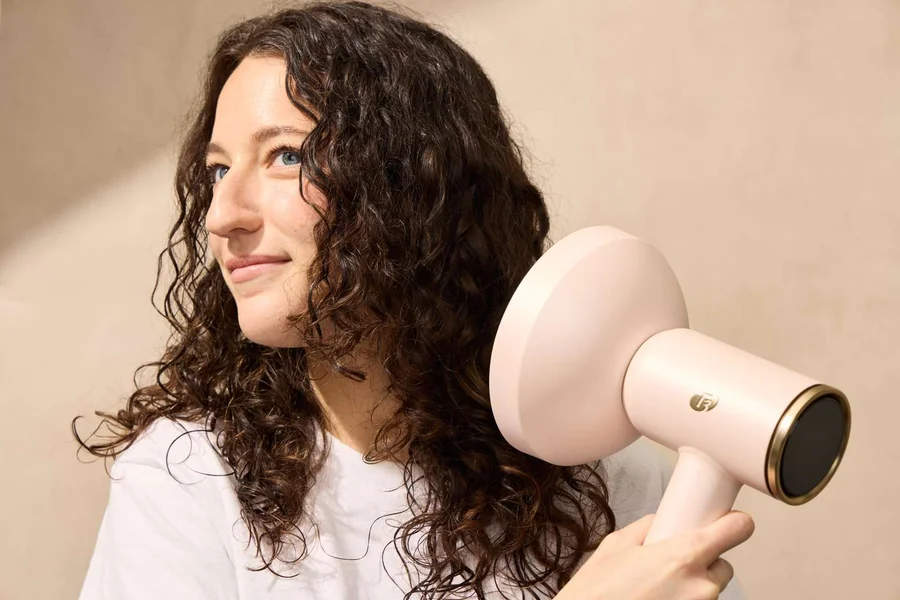
Most people replace their hair dryer only every few years, which makes a poor choice easy to regret daily. Knowing which features and specs actually matter helps separate a useful upgrade from an expensive logo.
As explained by All Women’s Stalk, the biggest differences between models today come from how they manage heat. A basic dryer simply pushes out hot air, while more advanced ones monitor airflow temperature and hold it within a safe range to avoid drying hair out. The most sophisticated designs go further and measure the distance to the hair, lowering the heat as the dryer moves closer so the effect on each strand stays even.
Several other features also shape everyday results. Ionization releases negative ions that cancel out static, so hair frizzes less and looks glossier, which is especially noticeable on fine or curly textures. An automatic pause function stops the airflow when the dryer is put down and restarts it once it is lifted, saving energy and wear on the motor. Voice or touch controls let you change modes mid-styling while one hand holds a brush, and magnetic nozzles snap on and off quickly when switching between a concentrator, diffuser or brush attachment. Noise and weight deserve attention too: two dryers with similar wattage can differ sharply in loudness depending on motor design, and anything much heavier than about 650 g gets tiring during long sessions.
When comparing product pages, these specifications are the ones worth checking:
- power between 1400 and 2200 W, ideally paired with temperature control
- a brushless motor, which tends to last longer, run quieter and keep airflow steady
- airflow speed in km/h, since higher speed dries faster at the same wattage
- at least two or three speeds and several heat settings
- an NTC sensor to track air temperature in real time
- a cord of 1.8 m or longer and a set of useful attachments
Prices fall into three broad groups. Models under roughly €20 usually lack sensors and ionization, run loudly and do little beyond drying. The €20 to €60 range adds ionization, multiple settings, quieter motors and magnetic nozzles, and it is where most AI-assisted dryers now sit. Above €60, buyers pay for proprietary care technologies such as infrared light, branded design, bigger accessory kits and longer warranties. The guide’s advice is to judge the feature list first, because a temperature sensor, ionization, a brushless motor and a tolerable noise level usually matter more than the brand name.
The AENO HD5 AI ProDryer serves as an example of how much the mid-range now delivers. It runs at 1500 W with a motor reaching 110,000 rpm and airflow up to 180 km/h, and its patented AI system adjusts heat based on distance to the hair, backed by an NTC sensor. It also offers Start-Stop auto-pause, ionization, voice control across AI, Soft, Hot and Cold modes, a touch display and InfraCare, a 490 nm infrared feature the maker says improves hair condition over time. Five magnetic nozzles, a 600 g body, a brushless motor rated up to 74 dB, a 2 m cord, a travel case and a 24-month warranty round out the package. Measured against the checklist, it covers most premium-level features while staying in the middle price tier, which shows that careful shoppers no longer need to spend top prices to get smart heat control.