
How do Root Systems Damage Foundations and Driveways?
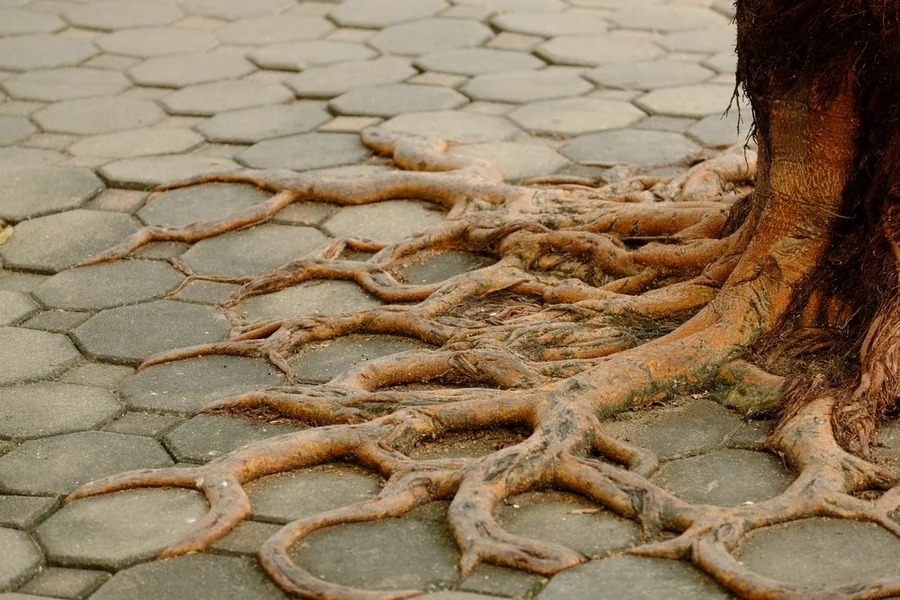
Tree roots are designed to search for water, oxygen, and nutrients, not to crack concrete on purpose. Even so, root growth can contribute to lifted slabs, uneven driveways, and stress around foundations when the wrong tree is planted in the wrong place or when soil conditions push roots toward hardscape. Damage is often gradual. A driveway may start with a slight bump, then a new crack appears, then a trip edge forms near the garage. Around a foundation, the first signs may include minor settling, a sticky door, or a hairline crack that slowly widens. Understanding how roots actually grow and how they interact with soil and construction helps homeowners reduce risk without assuming every tree is a threat. The goal is to protect structures while keeping landscapes healthy and stable over time.
How roots create hardscape problems
- Roots lift slabs more than they crush them.
A common misconception is that roots drill through solid concrete. More often, roots exploit existing weaknesses and then lift from below. Driveways, sidewalks, and patios already have joints, small cracks, and edges where watercan seep in. When fine feeder roots find moisture beneath a slab, they can thicken over time. As those roots expand in diameter, they act like a wedge, gradually raising sections of concrete. This lifting creates uneven surfaces that collect more water, feeding the same cycle. Soil type makes the problem worse or better. In clay-heavy soils, moisture changes can cause expansion and contraction, shifting slabs and creating gaps that roots can enter. In sandy soils, water drains faster, so roots may travel farther in search of reliable moisture, sometimes following the path of least resistance along compacted areas under hardscape. Another driver is irrigation and drainage patterns. A leaking hose bib, a downspout that dumps near the driveway edge, or a sprinkler that oversprays can keep one zone consistently damp, encouraging roots to concentrate where concrete sits. The damage often shows up years after planting, once roots have thickened and the slab has already developed small cracks from normal settling.
- Foundation impact through moisture changes and soil movement
Roots can affect foundations in two main ways: by exerting physical pressure on shallow footings and by indirectly altering soil moisture. Most roots grow in the top layer of soil, where oxygen is available, and this is also where many slabs and shallow foundation elements sit. If large roots grow near the foundation edge, they can press against the soil, causing localized lifting or uneven pressure. More commonly, the issue is moisture management. Roots draw water from soil, and in certain soils, that water loss can cause shrinkage. When soil shrinks near one side of a foundation, it can cause differential settlement, where one area settles more than another. Then, when heavy rain returns, the soil swells again, creating a repeated cycle of movement that stresses concrete and framing. This pattern is more noticeable when watering is inconsistent, such as one side of the home staying shaded and damp while the other dries out. If you are coordinating landscape work around mature trees, Tree Trimming Services can sometimes reduce canopy demand and water draw, which may help stabilize soil moisture patterns near hardscape areas. At the same time, longer-term planting and drainage corrections are planned. The key is to manage the environment around the roots so the foundation sees fewer extreme moisture swings.
- Driveway damage from root zones, compaction, and drainage
Driveways are vulnerable because they sit in the same zone where roots and water compete for space. When construction compacts soil, it reduces oxygen and forces roots to grow closer to the surface, where oxygen is more available. Surface roots are more likely to interact with concrete and asphalt. Compaction also changes how water moves, often causing runoff to collect at slab edges. If water repeatedly pools at a driveway joint, roots follow that moisture. As roots expand, they can lift joints, crack sections, and create the familiar ridge that turns a smooth driveway into an uneven patchwork. Asphalt driveways can show heaving and wave-like deformations because asphalt is more flexible than concrete and can shift as roots grow beneath it. Concrete tends to crack and lift along lines of weakness, such as joints or thin sections. Repair choices matter too. Patching one cracked area without addressing root growth or drainage often leads to repeated damage. A long-term approach may include improving drainage away from slab edges, extending downspouts, adjusting irrigation, and using root-friendly planting distances for new trees. In some cases, root barriers are installed, but they must be placed correctly to guide roots downward rather than trapping water against the slab.
Safer Hardscapes Over Time
Root systems damage foundations and driveways most often by following moisture and oxygen pathways, then expanding and lifting slabs along existing joints and weak points. Foundations can also be indirectly affected when roots alter soil moisture, causing shrinkage and swelling cycles that stress concrete and framing. Driveway damage is more likely when compaction and poor drainage keep roots near the surface and concentrate moisture at slab edges. Prevention comes from smart tree placement, consistent water management, and designs that give roots space away from hardscape. When issues are already present, mitigation should focus on drainage corrections and careful planning rather than quick root cutting. With a balanced approach, homeowners can protect structures while maintaining healthy trees for the long run.